
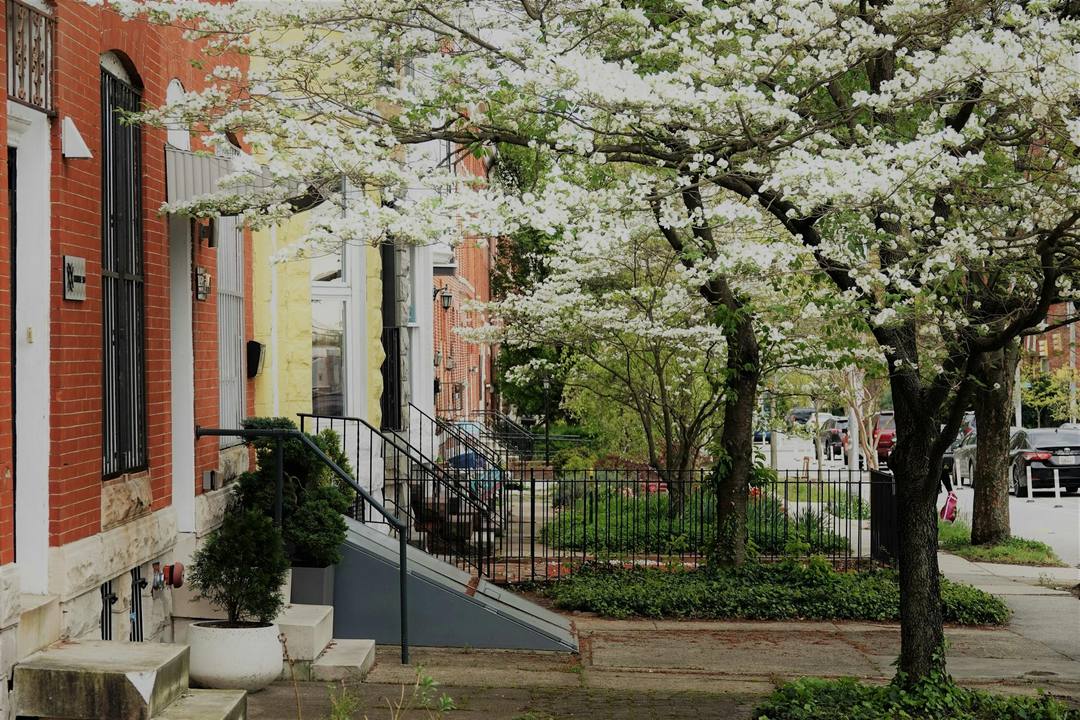
Before you buy a Baltimore rowhome, check five things: the roof and the walls you share with the neighbors, the sewer line from the house to the street, the wiring and plumbing, the permit history if the house was renovated, and the basement for water. Then pull the city lien certificate and price the repairs before your inspection period ends. Most rowhome surprises are in those places, and most of them can be found before settlement.
I renovate houses as well as sell them, so I read inspection reports with a contractor’s eye. This is the checklist I use when we walk buyers through city rowhomes. If you’re starting a search, our buyer page and the Baltimore homes search are the places to begin.
How Baltimore rowhomes are built
Baltimore has rowhomes from a long run of decades, and the age of the house tells you what to look for. The older ones we work on are usually brick, with brick party walls, wood floor joists set into those walls, and a flat or low-slope roof. Newer groups tend to be wider, with porches or garages and later systems.
What they share: you are attached to your neighbors, the roof and the walls are partly a joint problem, and most of the plumbing runs under the basement floor to a single line at the street. Width matters too. A narrow house leaves less room for a modern kitchen layout or a second bath, and that shapes what a renovation costs.
Check the year built on the state’s assessment record (SDAT), then read the house. A 1920s front with 2020s finishes still has 1920s bones.
Roof, gutters and shared walls
Most city rowhomes have flat or low-slope roofs covered with rolled roofing, modified bitumen or a coated membrane. They’re simple, and they fail at the edges: flashing at the parapet, the joint with the neighbor’s roof, and around skylights and hatches.
What to ask for:
- Roof access for the inspector: If the hatch is painted shut or there’s no ladder, ask the seller to provide access, or hire a roofer to look.
- Ceiling stains on the top floor, especially along the party walls. Fresh paint in one spot on a top floor ceiling is worth a question.
- The neighbor’s roof: Water from a bad seam next door can come in on your side. Look at the adjoining roofs from yours.
- Gutters and downspouts at the back. Water dumped against the rear wall ends up in the basement.
Party walls are brick in most older homes. Look for long cracks, bulges, or mortar washing out near the roof line. A bowed wall or a sagging floor that dips toward the party wall is a structural engineer question, not a handyman one.
Sewer laterals and the sewer scope
This one surprises people. Under the Baltimore City DPW water and wastewater regulations, DPW maintains the sewer lateral from the main to the property line. From the property line to your house, the pipe is yours.
In older homes that pipe can be clay or cast iron, and roots, cracks and low spots (bellies) are common enough that I’d scope every older city house before settlement. A sewer scope is a camera run through the line from a cleanout. It shows root intrusion, breaks, bellies and offset joints.
Cost is modest next to a repair. As of October 2026, InsideOut Property Inspection in Waldorf lists a sewer scope at $200 added to a home inspection, or $275 on its own. Get a local quote with your inspection. If the scope finds a problem, have a licensed plumber quote the repair before your inspection contingency runs out.
Wiring and plumbing in older homes
Older rowhomes can still have original wiring, or a mix of old and new. Things that show up in reports:
- Knob and tube or cloth-insulated wiring still in use, often in the walls or attic of the top floor
- Ungrounded two-prong outlets
- Small electrical service for modern loads, or a panel brand an insurer won’t write
- Galvanized supply pipes with low water pressure, and cast iron drains with rust at the joints
- DIY work in the basement
Ask your insurance agent early. Some insurers won’t write a policy on old wiring, or will charge more for it, which I cover in homeowners insurance in Maryland. And when a seller says the house was “rewired,” ask for the permit. That leads to the next point.
Spotting an unpermitted flip
Renovated city rowhomes can be great houses. They can also have new cabinets over old problems. The permit history is the fastest way to tell.
Baltimore City DHCD issues building, electrical, mechanical and plumbing permits. All applications go through the city’s E-Permits portal, which says the public can view information without creating an account. Search the address and compare what was permitted with what the listing claims. A full gut with a new bathroom, new wiring and a moved wall should show building, electrical and plumbing permits. If it shows none, ask why. DHCD’s permit line is 443-984-1809, per its permits page.
Other flip tells I look for:
- New drywall everywhere, so you can’t see the old wiring or framing
- A brand new electrical panel feeding old wiring
- A bathroom added in the basement with no visible ejector pump or vent
- Floors that bounce near a wall that was taken out
- Fresh paint on the basement walls in one strip, at the floor
If the house was a rental, ask the seller for its Baltimore City rental license history. City rentals have to be registered and licensed, and a licensed house has been through a rental inspection, which tells you a little about its past.
Basements and water
Most city rowhomes have a basement, and many get water at some point. Look for:
- Efflorescence (white powder) on the walls
- A water line or stains on the bottom of the walls or stairs
- A sump pump, and whether it runs
- Grading and drains at the back. Many rowhome yards slope toward the house.
- A floor drain that backs up, which points back to the sewer line
A dehumidifier running in a vacant house during a showing is a clue. Ask the seller’s disclosure about water, and ask your inspector to use a moisture meter on the walls.
Lead paint
Homes built before 1978 come with a federal lead disclosure. Under the EPA lead-based paint disclosure rule, the seller has to give you a 10-day opportunity to test for lead paint unless you both agree in writing to change or waive it. If you have young children or plan to renovate, use it. If you plan to rent the house out, Maryland’s lead rules for rentals add more work, and our property management team can walk you through it.
Getting real repair numbers before you settle
I’m not going to give you a cost chart here. Prices for rowhome work swing a lot with the size of the house, access and what’s behind the walls, and I’d rather you have real quotes than our guesses.
What I’d do instead:
- Schedule the home inspection and the sewer scope in the first few days of your contract.
- As soon as the report comes in, get written quotes from licensed contractors for the big items roof, sewer line, electrical, water in the basement.
- Use those quotes to ask for a repair, a price reduction or a seller credit. The inspection process is in home inspection cost in Maryland.
Check any contractor’s license with the Maryland Home Improvement Commission before you hire them. Our home improvement license guide explains what that license covers.
Questions to ask the seller
Before you finish negotiating, ask in writing:
- How old is the roof, and who did the last repair? Any warranty?
- Has the sewer line been scoped, repaired or replaced?
- Has the basement ever had water, and what was done about it?
- What work was done with permits, and what without?
- Was the house ever a rental? Was it licensed?
- Are there any open city notices or violations?
- Is there a ground rent on the property?
- How old are the furnace, the air conditioning and the water heater?
The seller’s disclosure or disclaimer form covers some of this. How as-is sales and that form work in Maryland is in our as-is guide.
Taxes and the lien certificate
Baltimore City’s real property tax rate is $2.248 per $100 of assessed value for fiscal 2027, per the Department of Legislative Services county rate table. That’s more than double Baltimore County’s $1.10, so put the real tax bill into your monthly payment, not the seller’s current bill. The homestead credit and how assessments work are in our Maryland property taxes guide.
The city also tracks unpaid charges against a property, such as water bills and other municipal charges, and reports them on a lien certificate. Per the city’s lien page (checked October 2026), a certificate costs $55, generally takes seven business days, and is good for 45 calendar days. The title company orders it, and the liens get paid at settlement. Give it enough time, especially if your contract has a short settlement date.
If you sell later, the same certificate process applies to you. More on that in selling a house in Baltimore City.
Bottom line
A Baltimore rowhome is a lot of house for the money when the roof, sewer line, wiring and basement check out. Scope the sewer, pull the permits, get real repair quotes inside your inspection period, and budget for the city tax rate. If you want help finding one and reading the reports, talk to The Wilson Home Team of Samson Properties or call Stacey at (240) 913-5221.
Sources
- Baltimore City DPW, Water and Wastewater Rules and Regulations, section III, checked October 2026
- Baltimore City DHCD, Permits, Inspections, Registrations and Licensing, checked October 2026
- Baltimore City E-Permits portal, checked October 2026
- Baltimore City Department of Finance, Liens, checked October 2026
- Maryland Department of Legislative Services, county property tax rate table, 2026
- U.S. EPA, Lead-Based Paint Disclosure Rule, checked October 2026
- InsideOut Property Inspection, published pricing, checked October 2026