
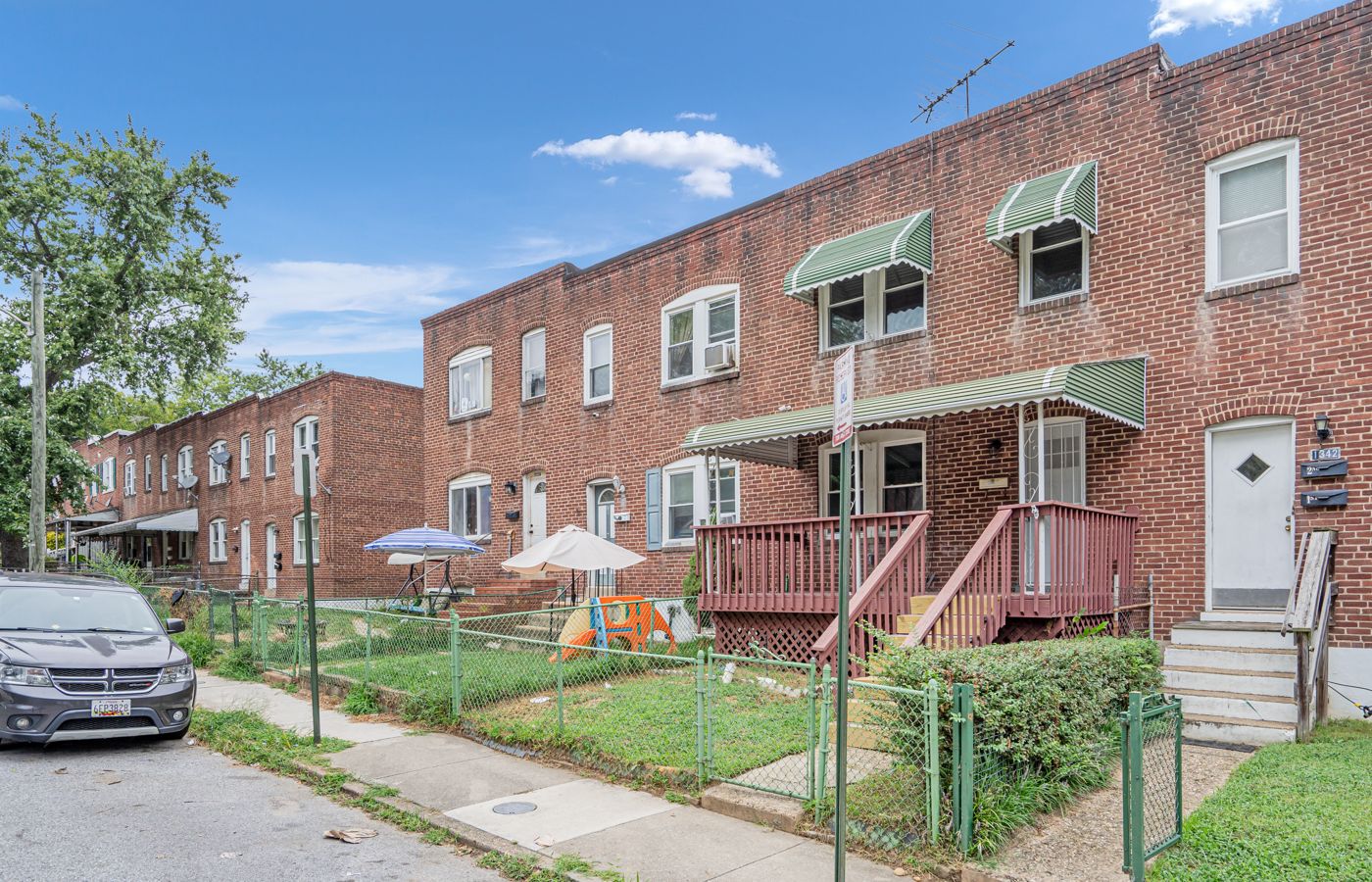
Every non-owner-occupied rental in Baltimore City needs two things from the city: a property registration, renewed every year, and a rental license, which now runs for two years. To get the license you register the property online, upload a passing inspection from a state-licensed home inspector who is registered with the city (or a passing Section 8 inspection), enter a current lead certificate for each unit, pay your registration fees and clear any open code violations.
We manage rentals in Baltimore City, and the license is the first thing we check when an owner calls. If you’d rather hand the whole thing off, that’s what SW Property Management does. If you want to do it yourself, here is the process as Baltimore City DHCD describes it as of October 2026.
Who needs one
Baltimore City DHCD says all non-owner-occupied properties must be registered every year, and that includes one- and two-family homes, buildings with three or more units, vacant buildings and vacant lots. Registration applies whether or not the property is rented, occupied or making money.
On top of that, every non-owner-occupied property that is rented must hold a rental license. So a rowhome you inherited and rent to a cousin still needs both. If you live in the property, registration doesn’t apply to you.
Step 1: Register the property
Registration is done online through DHCD’s property registration portal. A few rules that trip people up:
- Each property gets its own registration and its own number.
- Registration runs January through December and is due by January 1 every year.
- After a sale or transfer, the new owner has 10 days to register.
- You can add other people (a manager, a co-owner) as guests on the online account after you submit.
The fee is set by Baltimore City Code, Article 13, § 4-8: $30 per dwelling unit for non-owner-occupied properties with one or two units, and $35 per unit for multiple-family buildings, as of October 2026. Vacant structures pay an extra $100 per residential structure. If a property’s license was cut to a one-year term as a penalty, the code adds $15 per unit for each later registration year.
Step 2: Get the inspection
The rental license requires a passing inspection of every unit (for buildings with nine or fewer units) by a Maryland-licensed home inspector who is registered with Baltimore City DHCD. Under City Code § 5-7, the inspector has to certify that they have no financial interest in the property or its owner, and the inspection is at the owner’s expense. DHCD publishes a list of registered inspectors on its rental licensing page.
Timing matters. DHCD says inspection reports for new rental registrations must be submitted within 90 days of the inspection, and reports outside that window are rejected. The current city inspection form (revised April 8, 2026) repeats the 90-day rule. If you’ve seen a 30-day window mentioned elsewhere, that came from an older 2021 version of the form.
A passing Section 8 inspection for each unit also works, as long as it is not older than one year.
What the inspector checks
The Baltimore City Rental License Inspection Form is short, and you can read it before the inspector shows up. As of the April 2026 revision, the checklist covers:
| Item | What passes |
|---|---|
| Railings | Present on interior and exterior steps with more than 3 risers |
| Utilities | Gas and electric service metered and active |
| Wiring | No live wires visible in living areas; outlets and switches have cover plates; light fixtures work |
| Alarms | Smoke detectors and carbon monoxide alarms installed and working |
| Water | Hot and cold running water, hot at 110°F or more; no leaking fixtures; toilets flush; no supply or waste line leaks |
| Windows and doors | Windows that are meant to open, open and close and lock; unit entry doors close and lock |
| Weather | No openings in exterior walls or interior ceilings that let rain or snow in |
| Gutters | Gutter and downspout system channels water away from the house |
| Heat | Operable heat supply |
A second section lets the inspector “refer” a property to DHCD instead of passing it, for things like an unclean interior, rodent burrows outside, signs of pests, a basement bedroom without proper egress, or any other problem the inspector sees as an immediate threat to occupants. A referral means a full re-inspection by a city housing code inspector.
Step 3: The lead certificate
DHCD requires current lead certification information for each unit before it will issue the license. For a home built before 1978, that means the unit is registered with the Maryland Department of the Environment and has a valid lead inspection certificate. MDE requires registration of every pre-1978 rental, a $30 per unit annual fee due by December 31, and a passing risk reduction inspection at every change in tenancy, unless the unit is certified lead-free (MDE rental owner FAQ).
Lead is its own topic with its own deadlines. Our post on Maryland lead paint rules for landlords covers certificate types and turnover inspections.
Fees
Here’s what the city and state charge, as of October 2026. The inspector’s fee is a private price you negotiate.
| Item | Who charges it | Amount |
|---|---|---|
| Property registration (1-2 unit, non-owner-occupied) | Baltimore City DHCD | $30 per unit, every year |
| Property registration (multiple-family) | Baltimore City DHCD | $35 per unit, every year |
| Rental license inspection | Your licensed, city-registered inspector | Set by the inspector |
| MDE lead registration (pre-1978) | Maryland Department of the Environment | $30 per unit, every year |
| Lead risk reduction inspection | MDE-accredited inspector | Set by the inspector |
Sources: City Code § 4-8; MDE.
Common inspection fails and how they get fixed
Any line on that checklist can fail a unit, and most of them are small fixes. On an older Baltimore rowhome, walk the house for these before the inspector comes:
- Missing or loose handrail on basement or back steps with four or more risers. A properly anchored rail fixes it.
- Dead smoke or CO alarm, or none on a level. Replace the alarms before the inspection, not during it.
- Missing cover plates on outlets and switches. A few dollars each, and easy to overlook.
- Hot water under 110°F at the tap. Usually a water heater setting, sometimes a failing heater.
- Windows that won’t open or lock, especially painted-shut sashes in older rowhomes.
- Gutters and downspouts that are missing, disconnected or dumping water against the foundation.
- A ceiling stain from an active roof leak. On a flat rowhome roof this is often a coating or flashing repair.
Our maintenance work is done by Monarch Bay Renovations, a licensed contractor (MHIC #149066), so we can usually fix fails before the re-inspection instead of waiting on a vendor. You can use any licensed contractor you like.
Affiliated business disclosure: Monarch Bay Renovations is owned by Stephen Wilson, team lead of The Wilson Home Team of Samson Properties. You are not required to use Monarch Bay Renovations for any service.
What happens without a license
Two big consequences.
You can’t count on rent court. Under Maryland Real Property § 8-406, when a landlord in a licensing jurisdiction files a failure-to-pay-rent, holdover or breach-of-lease case, the landlord must plead, and then prove at trial by a preponderance of the evidence, that the property is licensed, exempt, or unlicensed only because of something the tenant did, a licensing-office error, or a problem in another unit of a multi-unit building. The District Court complaint form asks for the license number and expiration date. An owner who simply never got licensed doesn’t fit any of those exceptions.
The city can cite you and make you post notice. Under the Strengthening Renters’ Safety Act, DHCD’s page says owners notified of a failure to obtain a rental license must post a public notice, and failing to post a rental license is a $250 citation.
This is general information, not legal advice. If you’re already in a dispute with a tenant, talk to a Maryland landlord-tenant attorney.
2026 changes
The Baltimore City Council’s Strengthening Renters’ Safety Act took effect January 1, 2026. According to DHCD’s page on the act, as of October 2026:
- Flat two-year licenses. The act removed the old tiered system and gave all rental licenses a flat two-year term.
- No more transfers. Rental licenses can no longer be transferred. When a rental property sells, the new owner needs a new rental license within 60 days of the transfer.
- Priority dwellings. Buildings with 20 or more units that meet two or more violation criteria (an unabated violation notice for over 90 days, four or more violation notices in a year, a set number of 311 habitability calls, or a HUD inspection score of 79 or below) can be designated priority dwellings and get city inspections at least twice a year. Their licenses can be denied, suspended or revoked based on what inspectors find.
If you own a single rowhome, the first two changes are the ones that affect you.
Selling a licensed rental
Because licenses no longer transfer, plan for the buyer to get a new license. The buyer has 10 days to register the property after the transfer and 60 days to get a new rental license. If a tenant is staying through the sale, the buyer needs the lease, the deposit records and the lead paperwork at closing. Our post on selling a house with tenants in Maryland walks through that side.
Bottom line
Register by January 1 every year. Get the inspection done less than 90 days before you upload it. Have the MDE lead certificate in hand for any pre-1978 house. Fix the small stuff (cover plates, alarms, handrails, hot water temperature) before the inspector arrives. And if you buy a rental, budget 60 days to get a new license.
Want someone to handle the license, the lead paperwork and the repairs? Start with a free rent analysis and we’ll tell you what the house should rent for and what it needs first. For the county-by-county picture outside the city, see Maryland rental license rules by county, and for the bigger legal summary, our Maryland landlord-tenant rules guide.
Sources
All checked October 26, 2026.
- Baltimore City DHCD, Property Registration and Rental Licensing
- Baltimore City DHCD, Strengthening Renters’ Safety Act
- Baltimore City DHCD, Rental License Inspection Form, rev. 4/8/2026
- Baltimore City Code, Art. 13, § 4-8 Registration fees
- Baltimore City Code, Art. 13, § 5-7 Prerequisites for new or renewal license
- Maryland Code, Real Property § 8-406
- Maryland Department of the Environment, Lead Registration for Landlords and Rental Property Owner FAQ